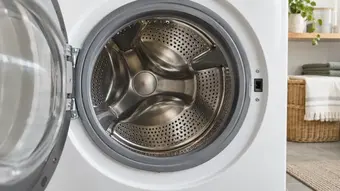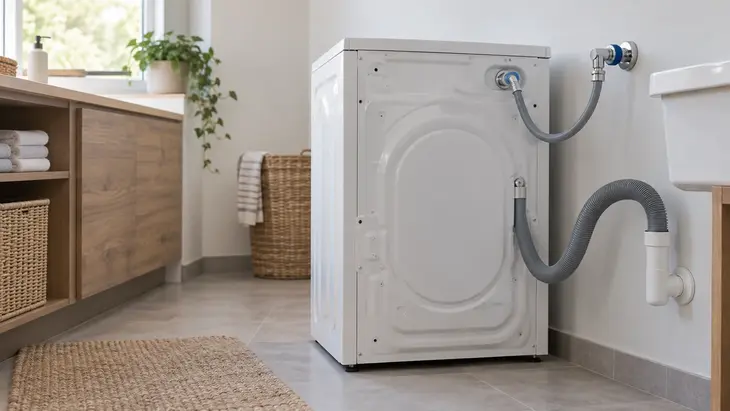
Check whether water is missing, building up, or draining away when it should remain in the tub. Each situation relates to a different part of the water system.
From the water supply to the outlet
Water enters through one or more inlets, passes through the valves and reaches the wash circuit. The controls use the level information available in the appliance. Water may drain out through a pump or by gravity: do not look for a pump without confirming that one is fitted.
- If it does not fill or takes too long to fill, start by checking the water supply, taps and external pipes. If there are two inlets, a fault affecting only hot or cold water means you should check each route.
- If the water level rises uncontrollably, stop the water supply safely. If water appears while the machine is switched off, distinguish between water entering through the supply and water returning through the drain.
- If it fills and drains at the same time, check the drain installation and whether the pump is actually running.
- If water remains after the cycle, distinguish between water retained by the programme and incomplete drainage. If the pump keeps running when the tub appears empty, do not repeat cycles to silence it.
Water left behind and water that returns
A tub that has not drained presents a different issue from one that emptied and then received water flowing back in later. Note the time interval and whether another appliance connected to the same drain was used. The colour or smell provides context, but does not by itself identify the source.
If you need to retrieve the clothes, use only the emergency drain specified for the model. Opening a plug while there is water inside can release a flow that is difficult to contain.
Frequently Asked Questions
Do all washing machines have a drain pump?
No. Some appliances, particularly certain semi-automatic models, drain by gravity through a valve. The height and layout of the outlet must suit that system.
Why might the spin cycle fail when water remains?
The controls may prevent high-speed spinning while they detect a water level that is incompatible with spinning. So, if you can see water collected in the tub, it is best to resolve the drainage issue first.
Does a drum with no visible water prove that the machine is underfilling?
No. Water may remain below the visible part of the drum, and the amount varies with the programme and load. Whether you can see the water does not replace a diagnosis of the filling issue.
Do not add water manually to an automatic machine to make up for a level that seems low; first check what fill level that design is meant to use.