
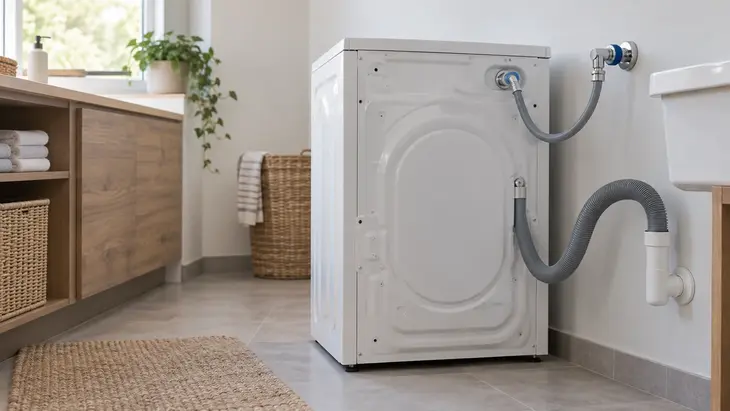
Check whether water is missing, building up, or draining out when it should stay in the tub. Each situation corresponds to a different part of the water path.
From supply to drain
Water enters through one or more inlets, passes through the valves, and reaches the wash circuit. The control system uses the level information built into the appliance. Drainage may rely on a pump or on gravity drainage: do not look for a pump unless you confirm one is present.
- If it does not fill or takes too long to fill, start with the water supply, shutoff valves, and external hoses. With two inlets, a failure limited to hot or cold water means you need to inspect each path.
- If the level rises uncontrollably, stop the water inlet safely. The appearance of water while it is off requires distinguishing supply from return flow.
- If it fills and loses water at the same time, the drain setup matters, as does whether the pump is actually working.
- If water remains when the cycle ends, distinguish programmed retention from incomplete drainage. If the pump keeps running with the tub apparently empty, do not repeat cycles to silence it.
Retained water and water that comes back
A tub that never fully drained calls for a different check than one that drained and then received return water afterward. Note the time gap and whether another appliance connected to the same drain was used. Color or odor can provide context, but they do not identify the source on their own.
When you need to retrieve the laundry, use only the emergency drain method specified for the model. Opening a plug under water can release a flow that is hard to contain.
Frequently Asked Questions
Do all washing machines have a drain pump?
No. Some machines, especially certain semi-automatic models, drain by gravity through a valve. The height and layout of the outlet must match that system.
Why might spin fail when water remains?
The control system may block high-speed spinning while it detects a water level that is incompatible with spin. That is why, when water is sitting there, it is best to solve the drainage issue first.
Does a drum with no visible water prove it is not filling?
No. Water may remain below the visible part of the drum, and the amount changes depending on the cycle and the load. Seeing water is not a substitute for diagnosing the fill process.
Do not add water manually to an automatic washer to make up for a level that seems low to you; first check what fill level that design expects.