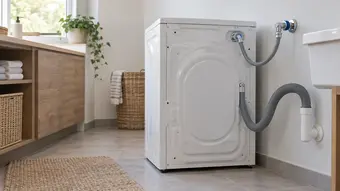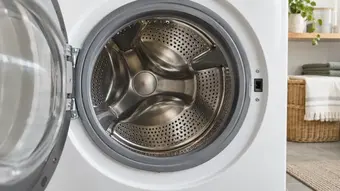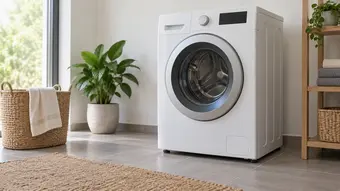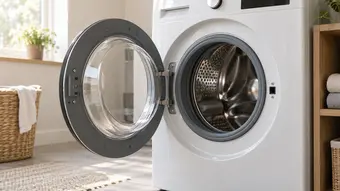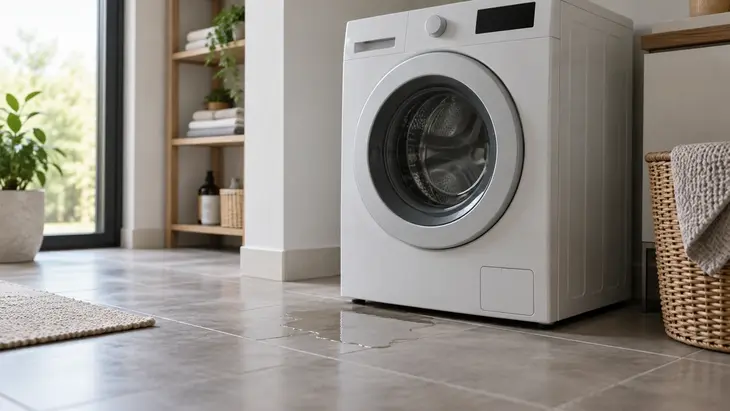
To find a leak, note where the water first appears and which stage of the cycle it occurs during. The final puddle may be some distance from the source because water can travel along the casing or floor.
Stop the leak before investigating
Stop using the machine and turn off the water supply when you can do so safely. If water reaches electrical connections, do not touch plugs or the casing to check: isolate the power from a dry, safe place. Do not run the washing machine with the casing open to look inside.
Where the water first appears helps guide your checks
- Water under the machine: note whether it appears during filling, washing or draining, and whether there has been any recent maintenance.
- Leak around the door: check the contact surface, seal and alignment.
- Overflow from the detergent drawer: distinguish water from suds, and note when the detergent is dispensed.
- Dripping from the filter or cap: check whether it started after the drain access was opened.
An external inlet connection can leak even when the machine is idle if it remains under pressure. A household drain that overflows during pumping calls for a plumbing repair, even if the puddle surrounds the washing machine.
Details worth keeping
Note the programme, load and whether you had just cleaned a filter, repositioned the detergent drawer or moved the machine. These changes can help you decide what to check first. Do not use glue or sealant on a connection if you have not identified its type of seal.
Frequently Asked Questions
Does the location of the puddle always identify the leaking part?
No. Water can run down the front or travel along a hose before dripping. The first place to get wet is more informative than the centre of the puddle.
Can a leak occur only on certain programmes?
Yes. The water level, dispensing stages, movement and draining operations vary. This connection can help locate the leak without confirming a specific part.
Can I keep using the washing machine if the leak is small?
You should not assume it is safe because the leak is small. Water could reach electrical connections or the leak could get worse. Stop using the machine until you have identified and fixed the source.
A follow-up test is only worthwhile once the cause has been fixed and all connections and safety covers have been restored.