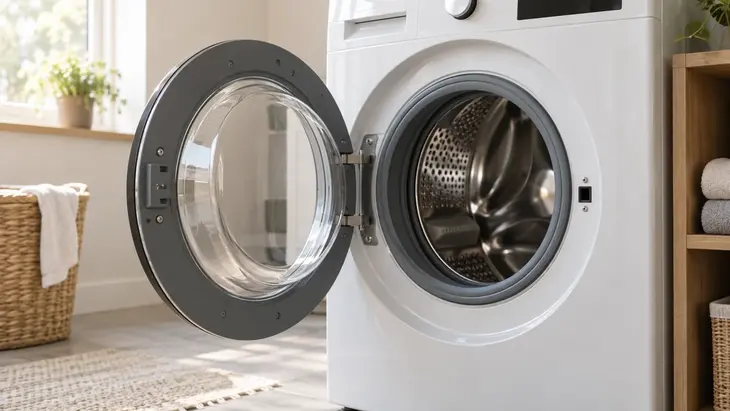
The door may be physically closed but not recognised, or it may remain locked because of water, temperature or movement. First, identify which of these situations is occurring.
Three states that are not equivalent
The latch engages mechanically; a device reports that it is closed or locks it, depending on the design; and the controls decide when it can start or open. A click alone does not confirm all three functions.
- If the cycle has finished but you can’t open it, see door won’t release.
- If a garment, latch or misalignment prevents it from closing, or the appliance doesn’t recognise that it is closed, use door or lid won’t lock.
- In a top-loader with a horizontal drum, jammed inner doors are a different problem from the outer lid.
Identify the mechanism before taking action
A front-loader, an agitator top-loader and a top-loader with a horizontal drum don’t necessarily have the same lock or opening sequence. Some appliances lock only during certain phases. The model’s manual can help you interpret the lock indicator.
A control lock may prevent commands without the safety lock being faulty. You should also never force a door that may still contain water or be at a high temperature just to check whether the handle works.
Limits of opening it yourself
Use the emergency release only if it is described in the manual and its conditions are met. Don’t use ropes, blows, weights on the lid or magnets to simulate a closed door.
Frequently Asked Questions
Does a lock symbol on the display always mean there’s a fault?
No. Depending on the symbol and model, it may indicate that the safety lock is active or that the controls are locked. Check what it means and which phase it appears in.
Why does it take a while for the door to unlock after the cycle?
The appliance may need to stop moving, reduce its temperature, drain or wait for the lock mechanism’s release time. There isn’t one standard wait time for all washing machines.
Do all washing machines have an accessible emergency release?
No. Some have an accessible release, while others require a technician. The presence of a tab on another model doesn’t mean you should pull an unfamiliar part.
Keep a record of the message and the water level before trying to cancel the cycle: this information can help distinguish an active safety feature from a faulty mechanism.