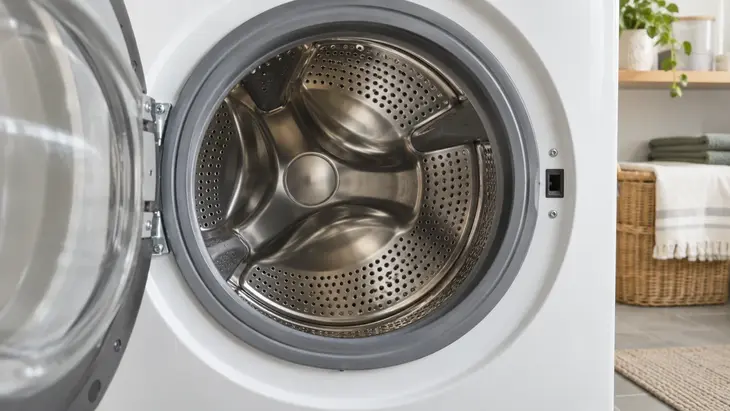
Washing by moving the clothes and spinning are different operations. To pinpoint the fault, check what movement the design is meant to make and whether the washing machine drains the water.
Movement depends on the design
A horizontal drum tumbles the clothes; a vertical-axis machine may use an agitator or impeller. Spinning speeds up the relevant assembly to extract water. Not all parts rotate in the same way during both phases.
Pauses, changes of direction and movements to redistribute the load may be programmed. Compare what happened with normal operation and the manual before treating a pause as a fault.
Choose the symptom you actually observe
- If it washes with movement but doesn't extract water from the clothes, see no or insufficient spin.
- For a top-loader that fills but doesn't move the clothes, check no agitation.
- If the drum should tumble but remains still, use the stationary horizontal drum diagnosis.
- If you notice unusual resistance when the machine is isolated from power, distinguish mechanical obstruction from resistance that is part of the design.
- If the drum is off-centre, rubs against something or moves independently of the tub, see play and sagging.
The motor may be waiting for another condition
An unrecognised door lock, retained water or a protection mode may prevent movement without the motor being the cause. A cycle that works with no load doesn't identify a faulty part either: the load affects effort, balance and control.
Don't repeat spin cycles if there are violent bangs, rubbing or a sagging drum. Never trick a sensor to observe the drum spinning with the lid open.
Frequently Asked Questions
Can it rotate during washing but fail to spin?
Yes. Fast spinning requires the machine to drain, balance the load and confirm the door is locked; those conditions may not prevent washing movement. Part of the drive system may also fail under certain conditions.
Do pauses in the drum always indicate a fault?
No. The programme may include soaking, measuring, changing direction and redistributing the clothes. Check whether it resumes and completes the intended result.
Why shouldn't you test the spin with the lid open?
The lid and its interlock protect you from moving parts. Don't hold down sensors or bypass contacts to watch the mechanism while it's operating.
Describe which movements the machine still makes; knowing that it washes but doesn't spin narrows down the checks better than saying it “doesn't turn”.