
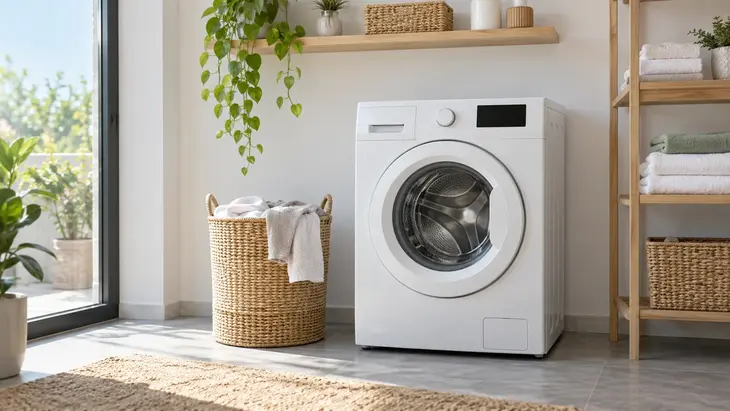
How you use or check a washing machine depends on its washing system and the specific problem. Identify the appliance and distinguish between a usage setting, a cleaning task and a fault before taking action.
Choose the guide that matches what you need to resolve
If the machine is not doing what you expect, start by describing what is happening: no water is entering, water remains at the end, there is no movement, a leak appears or the cycle stops. The faults and repairs guide organises these observations and separates external checks from technical work.
If a message appears, note its exact wording and the stage at which it appeared. Manufacturer codes and alerts need the model and its market: a combination of letters does not identify a universal fault, and some messages simply provide information about a function or a task that is due.
For built-up dirt, odours or routine care, see cleaning and maintenance. If the machine works but your clothes have residue, are creased or do not turn out as expected, the clothing use and care guide can help you check the programme, garments and products.
Identify the type of machine you have
A front or top opening alone is not enough to determine the mechanism. Top-loaders can have a vertical agitator or a horizontal drum; a semi-automatic twin-tub machine separates washing and spinning, while a washer-dryer combines washing and heat drying. The types, installation and efficiency section explains these differences and how to read information about connections, capacity and consumption.
Washing machine, washer and clothes washer are regional names for the appliance. You may also see the term washer in documentation; always check that it refers to washing textiles and to your product range.
Record your observations before changing settings
Note the full model number, message, programme and any recent changes to the installation or detergent. A pause, a water level that is hard to see or a time that resets may be part of normal operation. If there is smoke, electric shock or water near electrical connections, stop using the machine and seek appropriate help without repeating the tests.
Frequently Asked Questions
Does this guide also cover semi-automatic washing machines and washer-dryers?
Yes. It covers semi-automatic machines, twin-tub machines and washer-dryers with a single drum. Each procedure specifies the machine design it applies to; instructions for a front-load automatic machine do not automatically apply to the others.
Do washing machine, washer and clothes washer refer to the same appliance?
In the context of household textile washing, they usually refer to the same type of appliance. Terminology varies between countries; the loading system, functions and model help identify the machine.
Do I need to know the exact model before following a guide?
Recognising the type of machine may be enough to understand general concepts. To interpret a code, remove a part, connect supplies or follow a sequence of button presses, you need to identify the full model and consult its documentation.
Start with the observable issue and use the model manual to confirm which steps your machine supports.