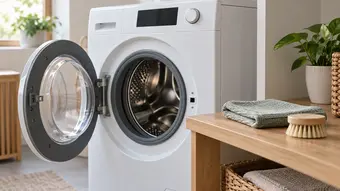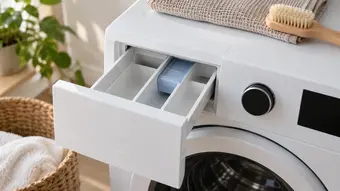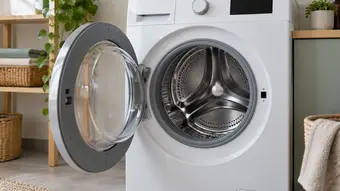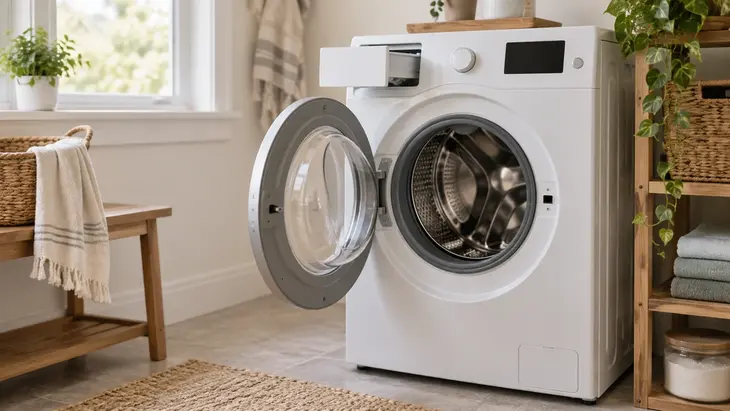
To deal with a bad smell from your washing machine, work out where and when it occurs. Damp residue may need cleaning, while a sewer or burning smell points to other possible causes.
Start with when and where it occurs
Observe without leaning in to smell the inside: does it occur when you open the machine after several days, when draining water, during heating, or all the time in the room? Check whether it is strongest around the opening, detergent drawer or drain connection. Don’t identify a microorganism based on how a smell is described.
| What you notice | What to check | Next step |
|---|---|---|
| Dampness and visible deposits | Seal, detergent drawer and accessible parts of the wash area | Remove residue and clean using compatible products |
| Smell associated with water that remains | Whether draining finishes and where water remains | Resolve the water retention before repeating cleaning |
| Sewer smell, especially when draining | Connection with the pipe, trap and other drains | Check the installation |
| Electrical, burning smell or smoke | Don’t run any more tests | Stop using the machine and follow the fault-finding steps |
Accessible inspection of the machine
If there are no signs of danger, empty the machine and, with the power isolated for any manual tasks, check the areas described in the manual. Inspect the folds of the seal, the detergent drawer and the drum. Only open the pump filter if access is authorised and any retained water has been dealt with.
For widespread contamination, see mould and slimy deposits. If you see material flaking off, follow the flakes and soap residue steps. Disinfection requires a verified purpose and method; it is not the automatic answer to every smell.
When the cause is elsewhere or you need to stop
A smell coming from the pipe may mean checking the drain connection. If it shares an outlet with another appliance, check the conditions of that shared connection. Don’t pour drain cleaner into the washing machine to treat a smell coming from the plumbing.
If there is a burning smell or smoke, see what to do about an electrical smell. Don’t run an empty cycle to check whether the smell goes away. A new product smell doesn’t mean the machine is safe either: work out whether it started after applying a product or after heating.
After cleaning
Allow the rinse and drying process to finish as directed, then see whether the smell returns before washing or only with a load. If it quickly comes back while the visible areas are clean, note the circumstances and arrange an inspection of the circuit or plumbing. If the machine doesn’t smell and only the clothes are affected, follow the guide to smells in clothes.
Frequently Asked Questions
Can a washing machine that’s clean on the outside smell from the drum?
Yes. A clean casing doesn’t tell you the condition of the drum, detergent drawer or drainage path. Check the source of the smell within the scope of authorised access.
Can you tell if there is mould by the smell?
No. A musty smell can accompany different types of build-up; it doesn’t identify species or confirm contamination throughout the machine. An inspection can guide cleaning, but it doesn’t replace testing.
Should there be a product smell after cleaning?
Fragrance shouldn’t be used as a test of whether the machine is clean. Follow the label and manual for rinsing; if a strong or irritating smell persists, don’t add another product or put clothes in until you know what remains.
Could the smell be coming from the drain even if the machine is clean?
Yes. The smell may come from the connection or drainage system. If it occurs when draining or also comes from other outlets, check the plumbing instead of repeating drum treatments.
Don’t cover up the smell with fragrances: you could lose a useful clue about whether the cause is still present.