
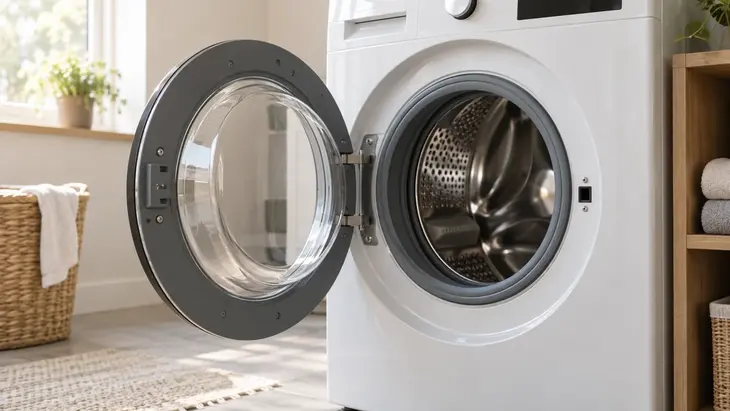
The door may be physically closed and not recognized, or it may remain locked because of water, temperature, or movement. First identify which of those situations is happening.
Three states that are not the same
The latch engages mechanically; a device reports the closure or blocks it according to the design; the control decides when to allow starting or opening. A click alone does not confirm all three functions.
- If the cycle finished but you still cannot open it, see door that will not release.
- If a garment, latch, or misalignment prevents closing, or the appliance does not recognize the closure, use door or lid that will not lock.
- On a top-loader with a horizontal drum, the stuck inner flaps are a different problem from the outer lid.
Identify the mechanism before acting
A front loader, a top-loader with an agitator, and a top-loader with a horizontal drum do not necessarily share the same lock or opening sequence. Some units lock only during certain phases. The model manual helps interpret the padlock indicator.
A control lock can block commands even when the safety lock is not faulty. Nor should you force a door that still has water in it or is at a high temperature to check whether the handle works.
Limits of a home opening
Use the emergency release only if it is described and its conditions are met. Do not use ropes, blows, weights on the lid, or magnets to simulate closure.
Frequently Asked Questions
Does the screen padlock always mean a malfunction?
No. It may indicate an active safety lock or a control lock, depending on the symbol and model. Check what it means and the phase when it appears.
Why does the door take so long to release after the cycle?
The appliance may need to stop moving, lower the temperature, drain, or complete the mechanism’s release time. There is no single wait time for all washers.
Do all washers have an accessible emergency release?
No. Some include an accessible release and others require technical service. The presence of a tab on another model does not mean you should pull on an unfamiliar part.
Keep the message and the water state in mind before trying to cancel: that information helps distinguish an active protection from a faulty mechanism.