To interpret a noise, combine its type with the stage of the cycle and the movement you observe. A bang, a roar and a hum each call for different checks.
Which sound is most prominent
| Sound or movement | Relevant guide |
|---|---|
| Banging and shifting as the machine speeds up | Excessive vibration and wobbling |
| A continuous roar that grows with the spin speed | Loud spinning noise |
| Scraping or rattling with each rotation | Metallic rubbing and objects |
| Humming with no water intake, movement or draining | An operation that does not take place |
A noise can travel through the casing and seem to come from somewhere else. It does not identify a part just because it can be heard nearby.
Before suspecting an internal fault
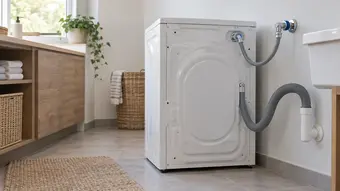
With the machine stopped, check for visible objects in the laundry, contact with furniture and external hoses hitting the casing. If it started after installation, note that; if it has gradually got worse, describe how it has changed.
Do not try to push an object out of sight. Retrieving an object from between the drum and tub depends on authorised access and may require a technician.
When to stop
Violent banging, the machine moving, continuous rubbing against the seal, a smell or smoke are reasons to stop using it. Do not hold the washing machine while it is spinning or remove panels to listen closer to the motor.
Frequently Asked Questions
Does a new sound always mean a part needs replacing?
No. It may come from a buckle, contact with furniture or a normal operation that you had not noticed before. Whether it persists and any associated signs determine whether it needs checking.
How should I record a noise to help with diagnosis?
Record it from outside without moving the machine or removing any panels, and note when it occurs. Do not run another test if there is already banging, intense rubbing or any signs of an electrical fault.
Why does the noise change during different stages of the cycle?
Water intake, pumping and wash movements use different systems. The machine also speeds up during the spin cycle, so the volume of the sound may change.
A recording made from a safe position can help; include the programme, cycle stage and load so the sound has context.