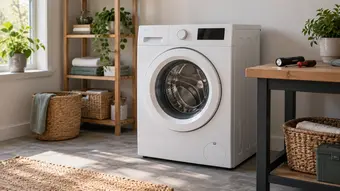
Maintaining a washing machine involves removing residue from accessible parts and following the routine for your model. Odours, mineral deposits and accidental contamination each call for a different approach.
Choose the right route for what you need to resolve
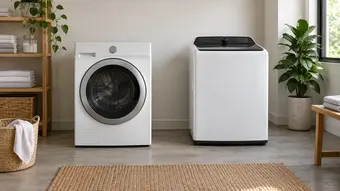
If you want to start a full inspection, first identify whether your machine is front-loading, top-loading, twin-tub or a washer-dryer. Cleaning by washing machine type helps you avoid looking for filters your machine does not have or running an automatic cycle on a semi-automatic machine.
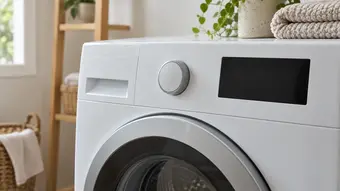
If the dirt is localised, use the cleanable components guide. It helps you tell a detergent drawer from an inlet or drain filter and determine which parts the owner can clean. The drum-cleaning cycle complements these tasks; its name alone does not tell you which products it can be used with.
Not all deposits are treated in the same way
| Situation | First step |
|---|---|
| Odour coming from inside the machine | Find out when it occurs and which area it is coming from before choosing a cleaning method. |
| Film, dried detergent or greasy residue | Identify the affected surfaces and a compatible cleaner. |
| Possible mineral deposits | Check the water and distinguish limescale from detergent. |
| Material accidentally introduced | Identify it and decide whether it is safe to handle or whether you need to stop using the machine. |
The washing machine odour guide distinguishes dampness and residue from drain odours or signs of burning. For mineral deposits, see limescale and water quality; for an incident after a load, see accidental or heavy soiling.
A maintenance routine you can keep up
Preventive maintenance combines care between washes with regular tasks and checks for wear. Note the product and programme used, what you found and whether it comes back. This information is more useful than switching between products without knowing what has changed.
Cleaning removes dirt; descaling tackles mineral deposits; disinfection requires a method with a verified purpose and conditions. Choose products according to their purpose and compatibility, and do not mix them. If there is a leak, a drainage fault, smoke or electrical damage, go to troubleshooting before starting a cleaning task.
Frequently Asked Questions
Does a normal wash clean the inside of the washing machine?
Water from a wash may carry away some residue, but it does not guarantee that the detergent drawer, folds or filters are clean. The machine has its own maintenance tasks.
Does a self-cleaning function remove the need for all manual maintenance?
No. Check which surfaces the function cleans. Parts with visible residue and checks specified in the manual still need attention.
Does cleaning the drum replace cleaning the filter?
No. An empty cycle is not the same as removing objects or fluff from an accessible filter. These are separate tasks, carried out according to the machine's design.
Can I follow the same routine for a front-loading washing machine and a twin-tub machine?
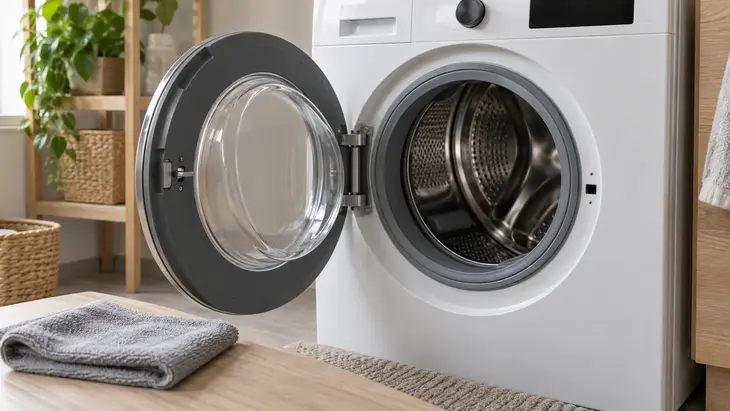
You can apply the same principles of checking and drying, but not the entire procedure. A front-loader has a door seal and a different system from a machine with two separate tubs.
Your model's manual defines what you can access and how to treat it. Use this as a basis for choosing a specific task and checking the result before doing more.