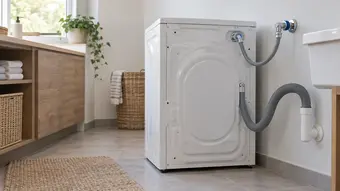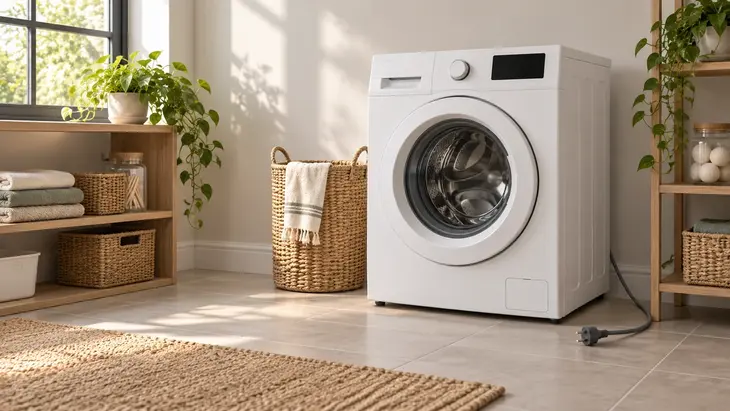
A washing machine with no lights, a protective device that trips and a casing that gives you an electric shock are not the same problem. Electric shocks, smoke and electrical damage mean you must stop using the machine.
Choose the main symptom
- It will not switch on or show any lights: distinguish between a power supply problem and an internal fault.
- The residual-current device, circuit breaker or fuse trips: note which protective device tripped and during which operation.
- It gives you an electric shock when touched: avoid further contact and isolate the supply from a safe place.
- It smells of burning or emits smoke: people’s safety is the priority.
- The water does not heat up or gets too hot: first identify how that model heats the water.
What varies between models and markets
The voltage, frequency, socket type and protective devices must be suitable for the appliance and the local electrical installation. Do not adapt a plug or increase a fuse rating to make it work. Whether the machine has an internal heater also varies: some models rely on a hot-water supply.
External checks and technical measurements
You can note any messages and look for visible damage from a safe area. Measuring insulation, opening modules or testing live components requires appropriate expertise and specific documentation. Disconnecting the appliance does not automatically make all its internal parts safe.
If there is water near the power supply, do not try to unplug the machine by entering the wet area. Seek help if you cannot isolate the supply from a dry place.
Frequently Asked Questions
Do all washing machines heat the water internally?
No. Some take hot water from a supply, while others have an internal heater or use a combination of both systems. The rating plate and manual will show which system the machine uses.
Which electrical details on the appliance rating plate should you check?
The voltage, frequency, rated power or current, and any product identification details shown. The manual and local requirements provide further information about connection and protection.
Is it enough to reset a protective device that keeps tripping?
No. Repeated tripping means the appliance or circuit needs to be investigated. Do not increase fuse ratings or bypass earthing or protective devices to keep the cycle running.
Do not try to clear an electrical fault by repeatedly reconnecting the appliance: when it occurs is useful information for investigating the cause.