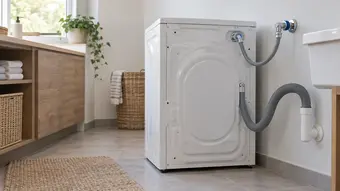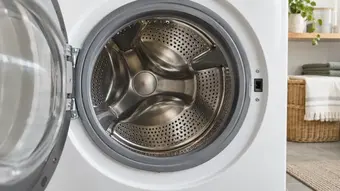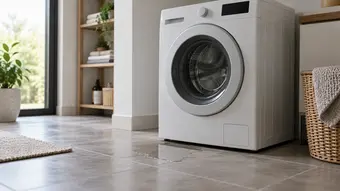
To diagnose poor drying, identify the system and check the drying load, spin cycle and programme. A washer-dryer may wash properly but fail only during drying.
Confirm that it’s a combination appliance
These checks apply to a machine that washes and dries in the same drum. A stacked pair of separate appliances requires the documentation for its dryer.
The system may use a heating element with condensation, air exhaust or a heat pump. Temperature, maintenance and water requirements vary. See integrated drying technologies to identify the model’s airflow path.
Before suspecting a fault
- Check the capacity allowed for drying; don’t assume it’s the same as the washing capacity.
- Check how much water the spin cycle removed and whether you selected an appropriate dryness level.
- Check the filters and maintenance areas that are actually part of the appliance.
- Check the water, outlet and ventilation requirements for the documented system.
The continuous-cycle setup and washer-dryer maintenance help distinguish settings and accessible dirt from a component fault.
Choose based on the behaviour
If it spins without heat, see drying not heating. If it finishes with clothes damp sooner than usual, check early cycle completion. Water buildup and overheating have their own troubleshooting steps and should not be addressed by blindly increasing the time.
Frequently Asked Questions
Can it wash properly while only the drying function is faulty?
Yes. Drying involves air circulation, heat generation and moisture management. The washing cycle completing successfully doesn’t confirm that these components are working.
Do all washer-dryers need a water supply during drying?
Don’t assume so. Some systems use water during drying; others have a different design or their own cleaning functions. The model’s manual indicates whether the water supply should remain on.
Does a long cycle prove that the drying system is faulty?
No. The load, fabrics, moisture remaining after the spin cycle, settings and drying system all have an effect. What matters is a persistent change or being unable to achieve the expected result under approved conditions.
Compare results using an approved load and programme. Don’t start another test if there’s already an unusual smell, abnormal heat or safety-related interruptions.