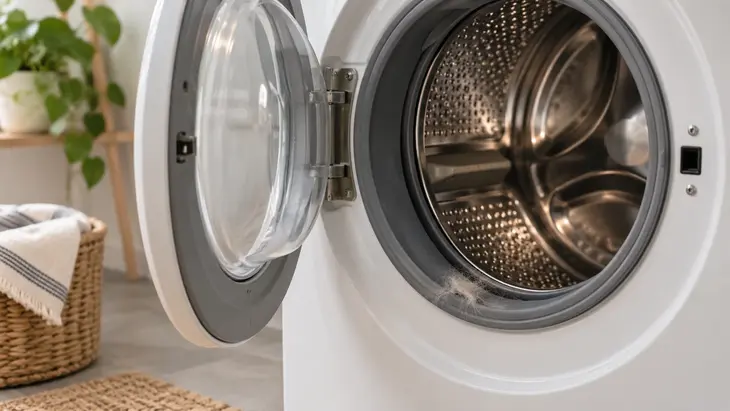
After accidental soiling, first identify what has been left in the machine. Remove accessible physical residue before running another cycle, but stop using the machine if there may be fuel, solvents or another unsuitable substance.
The type of residue determines what to do
| Residue | First step | Specific guidance |
|---|---|---|
| Hair and fibres | Collect them from the surfaces and any fitted collectors | Pet hair |
| Sand, mud or particles | Distinguish a dirty load from sediment in the water supply | Sand and mud |
| Paper or absorbent material | Remove scattered solids without trying to dissolve them | Paper or an accidentally washed nappy |
| Dye | Identify the dye and its cleaning instructions | Dye residue |
| Grease or an unknown chemical | Identify the substance before switching the machine on | Grease, oils and chemicals |
Prepare an empty machine
Wait until the cycle has finished and the door is safely unlocked, then remove the load and check what is visible. If there has been a chemical incident, or there is a strong smell or vapour, do not open the machine to inspect it closely: move away and follow the product's emergency instructions.
For residue that is safe to wash, stop the mechanisms and disconnect the power before cleaning by hand. Do not push build-ups into holes or the drain. Only handle filters and parts that the manual says can be opened, and manage any water before accessing a pump filter.
Treatment and follow-up checks
Remove physical material before running an approved programme if there is anything to collect. A cleaner alone will not remove sand, hair or a foreign object. After cleaning, check the empty machine and make sure no residue or product that still needs rinsing remains before the next load.
If the machine does not drain, makes new noises or residue returns from an enclosed area, do not run repeated washes to try to move it along. Arrange an inspection and report what material was introduced. Hazardous contamination is not resolved just because the drum looks clean.
Frequently Asked Questions
Should I clean the machine after every very dirty load?
Not necessarily with a full cleaning treatment. Check what has been left in accessible areas and carry out the tasks required by the residue and the manual, especially if a different load will follow.
Is it better to remove visible residue before running another cycle?
Yes, when the residue is safe to handle and accessible. Collecting it stops it being sent back through the system. If a hazardous chemical is involved, the priority is to stop using the machine and get instructions.
Will an empty rinse cycle resolve any kind of contamination?
No. It may flush away some types of residue, but it cannot guarantee the removal of solids, pigment or hazardous substances, or confirm disinfection.
This check helps restore the machine within the scope of its approved maintenance. Cleaning affected garments requires separate decisions.