
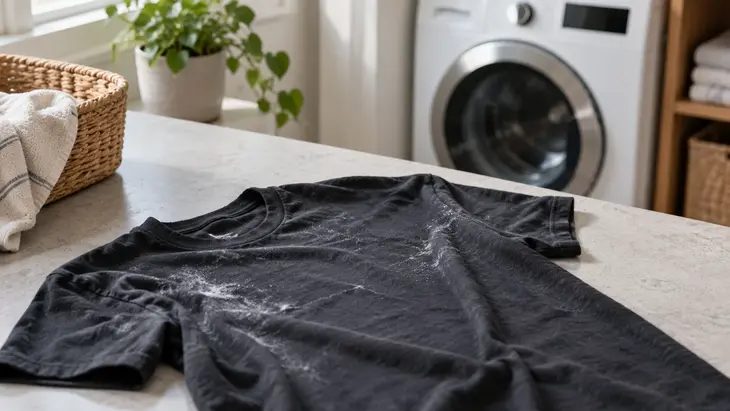
When clothes come out wrong, first describe the defect and when it appeared. Residue, color loss, and tearing require different decisions; repeating the same wash may not help and, in some cases of damage, may make it worse.
Preserve the evidence before treating it
Set the affected garment aside and check the care label, products, dosage, and cycle used. See whether the defect is concentrated in certain items, areas, or loads. A before-and-after photo, without filters, can make comparison easier without by itself proving a chemical or mechanical cause.
| Result | First distinction |
|---|---|
| White mark | Added product or residue versus loss of the original color. |
| New color | Dye transfer versus a stain from another source. |
| Lightened area | Discoloration or abrasion versus removable dirt. |
| Odor | Time it appeared: when it came out, dried, or was worn again. |
| Altered shape or surface | Shrinkage, tears or pilling require checking the type of damage. |
Choose a check that does not make the problem worse
If you suspect residue and the care label allows rinsing, check the product and its removal method before adding substances. If dye is missing or the fabric is weakened, there is not necessarily anything another wash can remove.
The new stains, the overall yellowing and the rough feel are investigated under different conditions. Change one identified variable at a time instead of increasing detergent, temperature, and time all at once.
Separate textile result from machine failure
If the machine does not complete filling, draining, or spinning, record that phase and look for the appliance diagnosis. A hole or a single stain does not justify replacing components. If there is a visible sharp surface or repeated damage, stop new tests with clothes.
Frequently Asked Questions
How do I check whether a mark was already there before washing?
Check previous photos, the condition of similar garments, and the usual location of dirt or wear. If there is no prior record, keep the uncertainty: do not treat the mark as a confirmed result of washing.
Should I repeat the same cycle when clothes come out wrong?
Only if treatable dirt has been identified and the method is still compatible. Chemical damage, shrinkage, or tearing is not corrected by repeating the cycle and may get worse.
Can a problem affect only some items in the load?
Yes. Garments differ in fiber, color, finish, wear, and direct exposure to products. The fact that only some items are affected does not by itself confirm or rule out a machine problem.
Use the observed defect to choose a specific check. When the fabric is damaged, more washing does not equal recovery.