
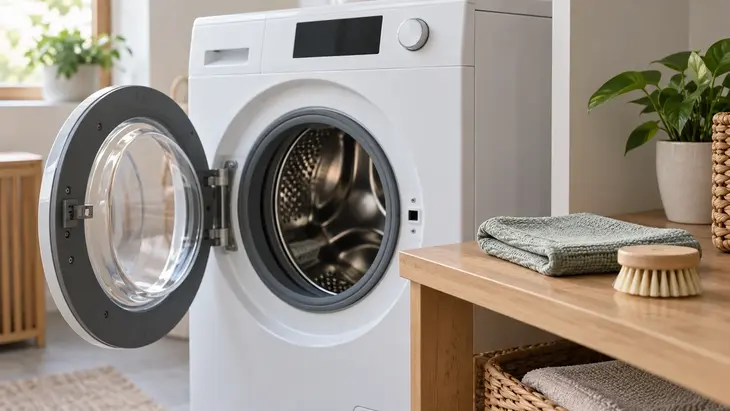
Maintenance frequency depends on the manual and actual use. Keep residue cleaning and inspection of hoses, seals, and connections separate: a part can deteriorate even if it looks clean.
Build a schedule by task
Start with the model instructions and note whether each task is triggered by time, by cycles, or by a specific signal. Do not assign the same cadence to the whole machine. The Panasonic front-loading maintenance guide distinguishes frequencies between components and warns that they may vary depending on use; it is an example of criteria, not a schedule for other machines.
| When | What to observe | What to record |
|---|---|---|
| When finished using it | Clothing removed, visible residue, and accessible moisture | Anomalies that were not there before |
| When the manual alert or interval is reached | Tub, dispensers, and planned filters | Task, program, product, and result |
| During a visual inspection | Visible hoses, joints, seals, and accessible cable | Drops, cracks, deformation, or changes in appearance |
A higher number of cycles can fill a lint trap sooner. A humid environment mainly changes drying between uses. Hard water means you need to check the instructions related to minerals; it does not mean that all filters need to be cleaned more often.
Before using a washer with an unknown history
- Identify the model and manual. Ask about breakdowns, transport, storage, and products used.
- With the unit unplugged, inspect what is visible without opening the housing. Check for old moisture, corrosion, damaged wiring, cracked hoses, or a deformed seal.
- Check the authorized maintenance parts. Distinguish removable dirt from damage; cleaning does not validate a prior repair.
- Only if the installation and condition allow it, perform the manual's initial or maintenance procedure and observe filling, draining, and connections during that check.
A history of flooding, pests inside, electrical odor, or visible damage requires evaluation before plugging it in. Do not use a hot cycle as a safety test.
Adjust the routine when the context changes
Include drying and ventilation between washes. For a long absence, prepare storage without use; if freezing is possible, follow the winter storage path. In equipment with multiple users, set up shared responsibilities and logs.
Frequently Asked Questions
Should cleaning depend on the months that have passed or on the number of washes?
Use the criterion indicated for each task in the manual. If it combines time and cycles, follow that condition; if it only gives guidance, the usage and residue log helps you adjust it.
Do parts that never show dirt need to be checked?
Yes. Visual inspection can detect cracks, deformation, drops, or corrosion even when there is no dirt. It does not mean you should disassemble parts or replace them based on a universal age.
Does heavy use change all frequencies equally?
No. Lint, dosage, moisture time, and water conditions affect different areas. Adjust the task whose log shows more buildup.
What should I check before using a washer whose history I do not know?
Identify the appliance and check the installation, cord, hoses, and accessible parts. Clarify whether it was stored or damaged. A clean appearance does not replace that initial check.
Review the schedule when residue reappears before the next planned task. The goal is to spot changes, without attributing a guaranteed service life to maintenance.