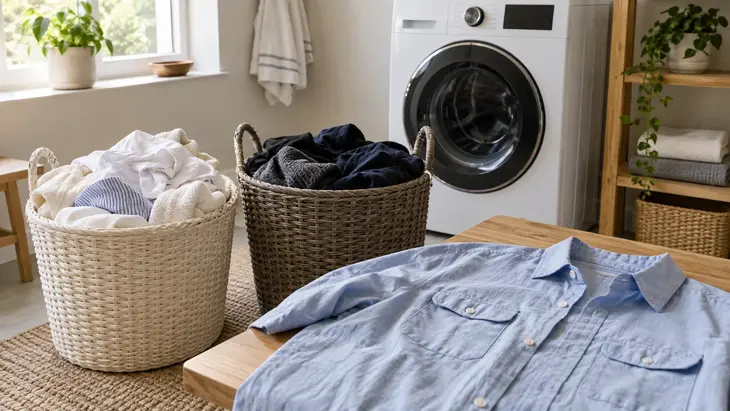
Before selecting a programme, decide what the machine can handle and which items can tolerate the same treatment. Sorting by colour helps, but construction, soiling and lint shedding also matter.
Check items before putting a load together
Spread items out as needed to spot stains, loose seams and objects. Empty pockets, remove non-washable accessories and prepare fastenings according to the item's construction: protect hooks or hook-and-loop fastenings that could catch on other fabrics. Do not tie drawstrings in makeshift knots that could prevent them from being cleaned or cause tangling.
Read the full care label. The fabric composition alone does not describe linings, fillings, prints or electrical components. The filter for items not suitable for washing should be applied before looking for a gentle programme.
Put together a compatible load
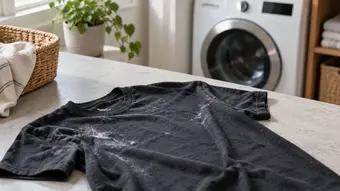
Compare the required temperature, mechanical action, colourfastness and type of soiling. A towel that sheds fibres and an item that attracts them may be suitable for the same temperature but still make a poor combination. Sorting laundry helps you assess these restrictions without creating a separate wash for every item.
If a stain needs pre-treatment, use a product approved for that area and fabric. Pre-treatment does not mean you can mix chemicals or leave the product to dry on the item.
From the laundry basket to the drum
Check the maximum load for the programme, not just the machine's nominal capacity. Place items as their construction requires, without compressing them just to close the door.
Laundry bags can help contain certain small items or protect fastenings, but they need space for water and movement. They do not make a prohibited item suitable for washing. Once the machine is loaded, check that nothing is caught in the door seal before starting.
Frequently Asked Questions
What should I do if an item's care label is missing?
Look up the item's reference or the manufacturer's instructions. If you cannot confirm how to care for it, especially if it is structured or has filling, do not try machine-washing it based on its appearance.
Should new clothes be washed separately?
It depends on the care instructions and colourfastness. If dye from a new item might transfer, keep it in a compatible separate load until you can follow the manufacturer's instructions.
Which takes priority if colour and fabric call for different loads?
Both limits must be met. If there is no treatment that will protect both the colour and the fabric, wash the items separately; do not try to make an incompatible load suitable by using a gentler programme or a colour catcher.
Once your items are suitable for washing, sorted and prepared, choose a programme and load size that will care for them properly.