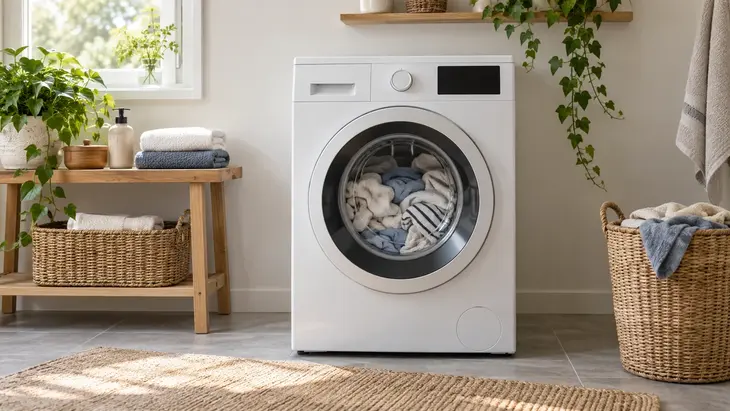
Efficiency is assessed by comparing the resources used with the results achieved under comparable conditions. Power, duration and visible water levels are not enough to determine how much a load consumes.
Start with the unit you want to compare
Electricity per cycle is expressed as energy; the rated power indicates a different quantity. Water used may be given per cycle or per mass of laundry. An annual figure adds assumptions about frequency that you need to know before applying it at home.
If the machine also dries, separate washing and the complete cycle, including capacity and external energy where applicable. Comparing a wash-only load with one that finishes dry leads to a misleading conclusion.
Results that go along with consumption
Spin extraction and residual moisture affect how much remains to be dried. Declared noise corresponds to a specific quantity and test phase, not to every sound in a home. Labels bring together some of these figures under different regional schemes.
Reduce resource use without repeating work
To reduce consumption, record loads, programmes and results before changing settings. Saving resources on a cycle that then has to be repeated can increase the total for the load. Keep fabric care and hygiene needs consistent as comparison conditions.
Beyond the wash cycle
Life-cycle footprint includes manufacturing, use, repair and disposal. Service life cannot be inferred from a warranty alone. Microfibre capture, water recovery and end-of-life equipment management address different effects; they cannot all be summed up by an energy rating.
Frequently Asked Questions
Does a lower-powered machine always use less electricity per wash?
No. Lower power used for longer can add up to more energy, and actual power changes between phases. The useful figure is energy per comparable cycle.
Can the energy rating be used to compare any capacity?
Not without qualification. The rating uses a method that takes capacity and test conditions into account; also compare absolute consumption and appliances of an appropriate size.
Does the bill include hot water supplied from outside the machine?
The machine’s electricity meter does not, by itself, measure the energy used by an external water heater. A label may include its own assumptions; check what the figure covers before adding it up or making comparisons.
Does a longer cycle necessarily use more energy?
No. It may take longer while using less power or less heating during certain phases. The energy used over the cycle and the programme result are the figures that let you assess it.
Keep the unit, programme, load and source with each figure; without those conditions, the comparison loses its meaning.