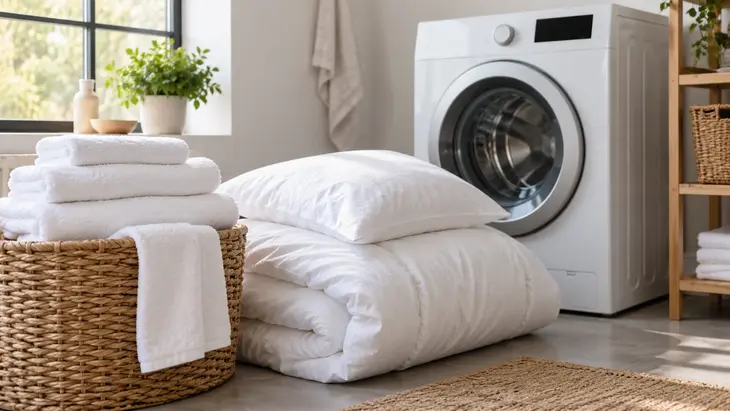
Washing removes dirt and can reduce microorganisms, but it is not the same as sterilisation. For a specific hygiene need, combine health guidance, the fabric care label, the product and the capabilities of the appliance.
Define what the load needs
Everyday dirt, a known illness and allergen control do not require the same outcome to be demonstrated. A product that removes stains may not have a stated disinfectant efficacy; a cycle called hygiene needs documentation of its scope and conditions.
| Situation | Decision route |
|---|---|
| Biological contamination | Handling and washing fluids, with specific guidance for the illness where available. |
| Using a hygiene treatment | Disinfectant label and documented cycle, including the phase and contact time. |
| Discomfort from clothing | Formulation, dose and rinsing, without diagnosing an allergy based on the wash. |
| Mites or pests | Distinguish dust mite allergens from bed bug control. |
Check compatibility before increasing intensity
Do not raise the temperature or mix disinfectants to resolve an incompatibility. If the necessary health guidance exceeds the limits of the garment or appliance, seek a suitable alternative; a gentler cycle should not be presented as equivalent.
In its general household guidance, the CDC recommends washing with detergent, following the recommended temperature and completing the drying process. This general guidance does not replace specific instructions for a pathogen or contamination.
Items with their own care routines
Baby clothes, cloth nappies and menstrual absorbents should be assessed based on their construction, soiling and care requirements. Do not transfer a treatment from one item to another just because they come into contact with the body.
If there is growth consistent with mould, first assess the condition and whether the item can be salvaged. A household wash cannot guarantee that every porous material can be saved.
Frequently Asked Questions
Does clothing that smells clean prove it has been disinfected?
No. Smell is also affected by fragrances, moisture and other residues; it does not show which microorganisms remain or whether a validated process was completed.
Does every programme called hygiene use the same temperature and duration?
No. The name may refer to different sequences and performance levels. Check the manual and documentation for the model, including load restrictions.
Is a bleach always a laundry disinfectant?
No. Bleaching and disinfection are different uses. The label must state that it is intended for hygienic use on laundry and specify the conditions required for the stated efficacy.
First define the hygiene need, then check how to meet it. Intensity or a product name is no substitute for that verification.