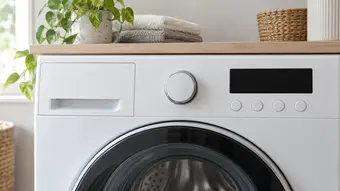
Adapt the sequence to the machine and context without overriding garment care limits. A twin-tub washer requires transfers; a washer-dryer requires compatibility with the drying phase, and shared laundry facilities add operator instructions.
What changes with the equipment available
With a semi-automatic washer, you need to coordinate filling, draining and rinsing, and transfer the load when there are two tubs. Don’t assume the wash timer completes the entire laundry cycle.
With a washer-dryer, the load in a continuous cycle must be suitable for both phases. Depending on the capacity and program, you may need to wash one amount and remove some items before drying. Plan for this before you start.
With shared washing machines, read the machine and facility instructions, including whether detergent is already included. Don’t copy your at-home dose or tamper with a payment mechanism that isn’t responding.
Organizing who does each step
If several people are involved, identify special-care items, added products, the program and the remaining phase. A brief note helps prevent someone from adding a second dose or drying an item that should be excluded.
Accessibility adaptations should address specific preferences and needs: identifying controls, measuring detergent and handling loads can be addressed separately. Not every support works for everyone, and not every app is accessible.
Situations that change the preparation
Forgotten laundry calls for assessing its condition and drying needs; there’s no universal number of hours. To organize future loads, decide when to rewash based on use and how soiled the items are.
Pet textiles need hair removed and fillings checked. Workwear may require keeping contaminants out of the household laundry. If you plan to dye clothes, first check that both the dye and the machine are suitable for that use.
Frequently Asked Questions
What information in the manual do I need before using an unfamiliar washing machine?
Identify the model, available programs and load limits, products and dispensers, how to open and pause the machine, and how to complete draining. For shared equipment, also check the operator’s instructions.
Can I use the same detergent dose in a laundromat machine?
No. Check whether detergent is included and what amount is appropriate for that machine, load and product. An additional dose may be unnecessary or prohibited by the service.
What load details should I note if someone else will finish the laundry?
Note items with restrictions, the products and amounts already added, the program and remaining phase, and how the items should be dried. Avoid vague descriptions such as “normal cycle” when the panel has several options.
Note the remaining phase and any aftercare when someone else will continue the laundry, especially if items will be dried.